Who Checks the AI When Expertise Is Cut?
AI oversight depends on more than a final human check. Companies need time, training and retained expertise to protect quality as they adopt AI.
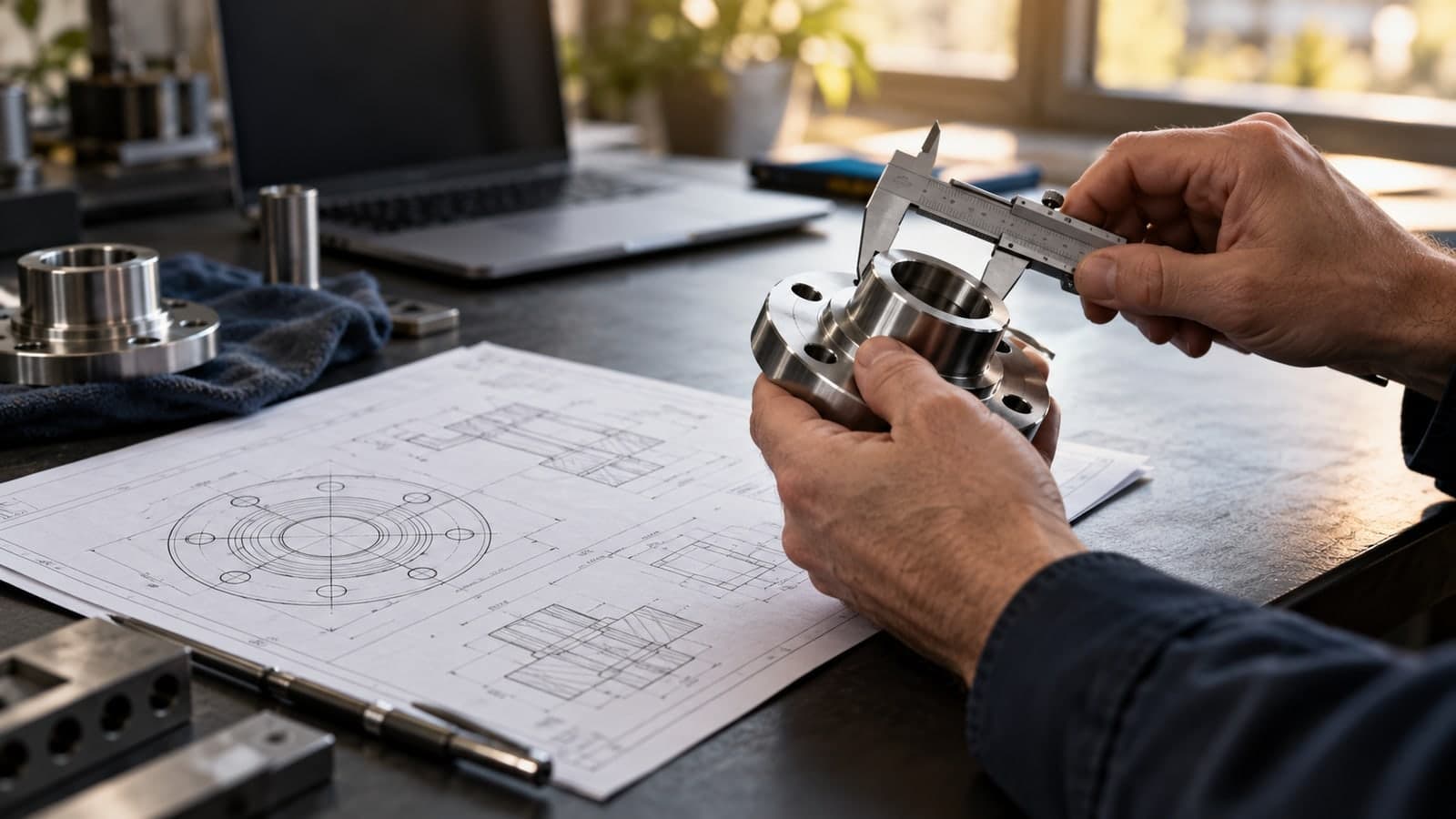
AI can save work, but effective human review depends on the expertise, time and training companies choose to retain.
I would like to pause at the sentence: “A human will check it in the end.” Who exactly? How much time will that person have? And how will they know when a convincingly written answer is technically wrong? If we use AI in companies, we need to be able to answer these questions—especially when we are also planning to get more work done with fewer people.
On 14 October, the European Commission’s Joint Research Centre published an analysis of AI use in strategic economic sectors. According to the analysis, a lack of expertise is one of the significant barriers to adoption. It also describes a relationship between organisational change and the use of AI in production. Source: JRC. For me, this raises a question for business leaders: what knowledge must remain in the team for the new software to be used well?
Recognising a good answer
Take an AI tool that assembles documents for a proposal. It finds previous projects, summarises requirements and suggests a cost estimate. That can save a lot of work. But during review, someone still needs to recognise whether the earlier project is genuinely comparable, whether a requirement is missing and whether the proposed effort fits this particular customer’s circumstances. That takes an understanding of the business.
A fluent formulation can even make an error harder to spot. An incomplete document invites questions. A well-written rationale can quickly seem final.
When introducing an application like this, I would test whether the people expected to review its output can actually detect typical errors. Use concrete examples from their work, including outputs that look convincing at first glance but contain a decisive mistake. If the team misses that mistake, the instruction “Please check before use” will do little.
Where will the next generation learn?
This particularly concerns me when it comes to early-career employees. Many tasks that can now be partly automated have also served as learning opportunities: gathering documents, writing an initial analysis, checking figures and preparing a draft for someone more experienced to correct.
Through this work, people learn which details matter, which exceptions are common and why an answer that seems plausible may still fail. I support making tedious work easier. But if these steps disappear, a company needs another way to build that knowledge.
Otherwise, we may end up with experienced employees who can assess AI output and younger colleagues from whom we expect the same judgement without giving them the practical experience they need. That problem is unlikely to appear in the initial cost calculation. It will become visible when experienced people are gone.
That is why I would also change training when introducing AI. Early-career employees could first develop their own assessment, then compare it with the AI’s output—with someone who can explain where both assessments go wrong. That takes time. That time is part of the investment.
Human review takes working time
Review is not a cost-free add-on, even for experienced employees. If software prepares five times as many cases, someone has to decide how those cases will be checked. It is difficult to assume that every output can be reviewed thoroughly if the same people still have the same amount of time.
Sampling may be enough for some tasks. Others need formal approvals or a full expert review. It depends on what an error could cause and how reliably it can be detected. When calculating time savings, companies should include review, corrections and the handling of exceptions.
I would want to know how long it takes to get a case to a usable result. The quick first draft is only one part of that process.
Put expertise in the plan
I would involve the people who do the work well today early in an AI project. They can explain which cases are straightforward and where closer attention is needed. They know the questions that never appear in a process document.
These people need time to turn their knowledge into tests, examples and training. That is real work. It is difficult to do on top of an unchanged day-to-day workload. A sound implementation plan should therefore also answer: Who learns what? How are errors discussed? Who helps with a difficult case? How is knowledge retained when experienced colleagues leave?
AI can significantly extend the capabilities of a good team. For that to happen, the team must continue to understand what it is doing. Before removing expertise from a cost plan, I would want to know who will ultimately be accountable for quality—and whether that person can still assess the work themselves.
Related reading

Artificial Intelligence5 min read
AI Can Find a Pattern. It Cannot Tell You What It Means.
AI can surface patterns across vast datasets, but human expertise, explainability and scrutiny remain essential when findings shape consequential decisions.
Read
Artificial Intelligence4 min read
Europe Doesn’t Need Another AI Strategy. It Needs Buyers.
Europe is investing in AI, but funding and infrastructure are not enough. European technology companies need customers who buy and deploy what they build.
ReadNewsletter
New essays, sent when there is something worth saying.
Occasional notes on European technology, AI and company building. No cadence, no marketing, unsubscribe in one click.